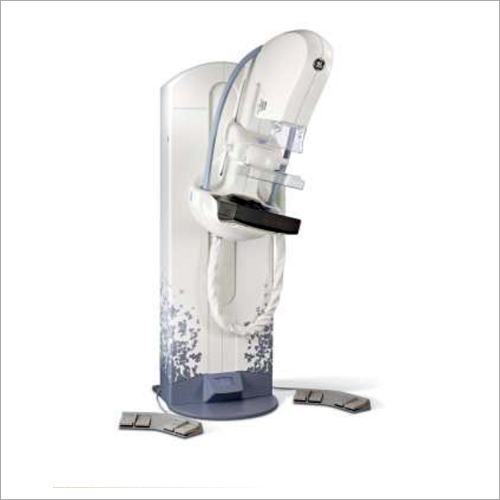
GE Senographe DMR Mammography Machine
Product Details:
- Temperature Range +10°C to +40°C
- Height Adjustable Gantry
- Color Code White & Blue
- Treatment Type Diagnostic
- Material Metal & High-grade Plastic
- Properties High Resolution Imaging, Reliable Performance
- Display Type LCD
- Click to View more
X
GE Senographe DMR Mammography Machine Price And Quantity
- 10 Unit
GE Senographe DMR Mammography Machine Product Specifications
- Mammography Machine
- Approx. 1750 mm x 760 mm x 1910 mm
- 50/60 Hz
- Semi-Automatic
- Breast Cancer Screening and Diagnosis
- Single Phase
- High Resolution Imaging, Reliable Performance
- High Imaging Accuracy
- LCD
- Internal, for Case Data
- +10°C to +40°C
- White & Blue
- Adjustable Gantry
- Metal & High-grade Plastic
- 220-240 V
- Diagnostic
- Digital
- Clinical Mammography Imaging
- 10% - 90% (non-condensing)
- Electric
- Approx. 350 kg
- 1.0 kVA
- Hospitals, Diagnostic Centers
- Vertical, Floor Standing
- X-ray Mammography Imaging
- 0.1/0.3 mm
- Manual & Automatic Controls
- Short - Due to high sensitivity
- DICOM, USB
- 18x24 cm, 24x30 cm
- Senographe DMR
- High Definition, Low Noise
- Up to 20 kg
- Digital Flat Panel
- 23-35 kV
- Stationary
- IEC 60601 Compliant
- 160 kg
- Automatic Exposure Control, DICOM Compatible
- Proprietary/Configured by GE
GE Senographe DMR Mammography Machine Trade Information
- Faridabad
- 10 Unit Per Month
- 1 Months
- All India
Product Description
The GE Senographe DMR Mammography Machine is a motor-driven unit with motorized compression system and tube housing stand. Some of its features which make this machine user-friendly are a digital display, hands-free compression, height adjustment and digital angulations. The machine reduces the overall exposure time of a patient in X-rays to avoid any side effects on the health. Featuring 18X24 compression paddle, the machine offers magnification of 1.3x to 1.8x and 1.9x for specimens. Each machine is designed with molybdenum, rhodium and aluminum filter materials of 4 to 60ma and 22 to 49 KVp. While using this GE Senographe DMR Mammography Machine, the optimum distance between source to the image is 66cm adjustable.
Specification:
Specification:
- Small(0.1mm) and large(0.3mm) focal spots to provide excellent spatial resolution and image contrast
- Frequency generator w/ 5 KW with good quality lead glass shield
Exceptional Imaging Performance
The Senographe DMR utilizes a high-sensitivity digital flat panel detector, ensuring short exposure times and crisp, high-resolution images. Its dual focal spot options and automatic exposure control enable optimized imaging for a variety of body types, aiding in early breast cancer detection.
Advanced User Controls and Connectivity
Operators can choose between manual and automatic settings, tailored through a GE-configured proprietary operating system. The system is equipped with DICOM and USB for seamless data management, while its large internal storage simplifies case archiving and workflow.
Built with Patient Comfort and Safety in Mind
With an adjustable gantry and up to 20 kg compression force, the Senographe DMR prioritizes patient comfort during procedures. The machine is IEC 60601 compliant, operates in a wide humidity and temperature range, and can be easily integrated into hospitals and diagnostic centers.
FAQs of GE Senographe DMR Mammography Machine:
Q: How does the GE Senographe DMR ensure high-quality mammography imaging?
A: The machine uses a digital flat panel detector, high-definition imaging technology, and automatic exposure control to deliver precise, low-noise images necessary for accurate breast cancer screening and diagnosis. The dual focal spot sizes and short exposure times further enhance image quality and clarity.Q: What are the main benefits of using the Senographe DMR for breast cancer screening?
A: Benefits include high-resolution imaging, reliable performance, and advanced safety features. It accommodates up to 160 kg patient weight and uses high sensitivity detectors, resulting in reduced exposure times and improved patient throughput. Its ergonomic design ensures patient comfort during the diagnostic process.Q: Where can the GE Senographe DMR be installed and used?
A: This mammography machine is suitable for installation in hospitals and diagnostic centers. Its stationary, floor-standing design and robust build allow for secure setup in clinical imaging suites, making it reliable for both large and mid-sized healthcare facilities.Q: What is the process for conducting a mammography exam using this machine?
A: The technician positions the patient and selects the appropriate manual or automatic imaging settings. The gantry height is adjusted, and the breast is gently compressed (up to 20 kg force) for optimal imaging. The digital images are then captured with short exposure and can be immediately reviewed and stored within the internal system or exported via DICOM/USB.Q: How does the machine maintain compliance with medical safety standards?
A: The Senographe DMR is built to IEC 60601 standards, featuring advanced electrical safety, a durable metal and high-grade plastic casing, and reliable operation within a broad range of environmental conditions. These protocols ensure the safety of both the patient and operator during use.Q: When should clinics consider upgrading to the Senographe DMR system?
A: Clinics should consider this upgrade when seeking to improve efficiency, image resolution, and patient comfort in mammography services, especially if current systems lack digital imaging, DICOM connectivity, or advanced exposure controls.Tell us about your requirement

Price:
Quantity
Select Unit
- 50
- 100
- 200
- 250
- 500
- 1000+
Additional detail
Mobile number
Email


Our Location
Contact Details

- Plot no. 4, Near Metro Pillar no. 599, Milestone 15/1, Mathura Road NH2,Faridabad - 121003, Haryana, India
- Phone : 08045478895
- Mr. Deepak Roy Sharma (Director)
- Mobile :08045478895
- Send Inquiry
GST : 06AADCR7794N1ZK
 Send Inquiry
 Send Inquiry
 Send SMS
RADIMAGE TECHNOLOGIES PVT. LTD.
All Rights Reserved.(Terms of Use)
Developed and Managed by Infocom Network Private Limited.
Developed and Managed by Infocom Network Private Limited.

