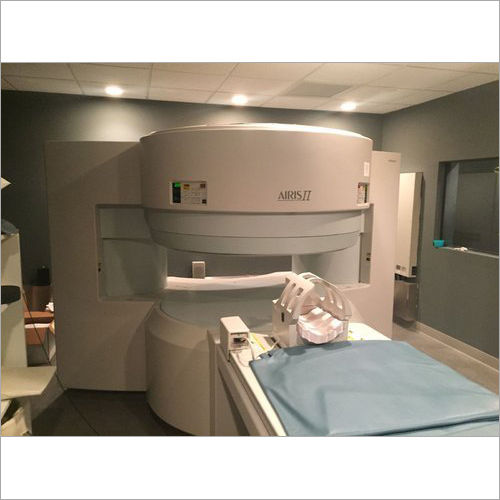
Hitachi MRI Scanner
27.00 - 29.00 INR/Set
Product Details:
- Material High-Grade Medical Stainless Steel, Polymer
- Condition New
- Technology Open MRI, Superconductor Technology
- Portable No
- Disposable No
- Wall Mounted No
- Air Pressure Standard Room Air Pressure
- Click to View more
X
Hitachi MRI Scanner Price And Quantity
- 27.00 - 29.00 INR/Set
- 1 Set
Hitachi MRI Scanner Product Specifications
- Automated & Manual Modes
- PACS, Hospital Information Systems
- Integrated Data Storage
- Network Connectivity, DICOM Protocol
- Standard Room Air Pressure
- Open Design, Comfortable for Patients
- Advanced MRI Receiver Coil
- 220-240V AC
- Patient Bore: 70 cm
- User-Friendly MRI Operating System
- No
- High Resolution LCD Monitor
- No
- High Image Resolution
- Open MRI, Superconductor Technology
- Yes
- Low Noise Operation
- Approx. 5 Tons
- Approx. 20 kW
- No
- 1.5 Tesla Field Strength
- High-Grade Medical Stainless Steel, Polymer
- Hospital Diagnostic Imaging
- White & Grey
- Electric
- New
- Cryogen-Free, Helium Compression
- 33 mT/m
- 200 kg
- RF Shielded Room
- Multi-Directional
- 0.5 - 10 mm
- Emergency Stop, Patient Intercom, ECG Monitoring Capability
- T1, T2, FLAIR, Diffusion, MRA, 3D
- Wide-Bore
- Motorized with Adjustable Height
Hitachi MRI Scanner Trade Information
- 2 Set Per Month
- 3 Months
- All India
Product Description
Specification
Type Traditional
Machine Condition Refurbished
Model Name/Number Airis II
Magnetic Strength 0.3 Tesla (T)
Machine Type Open
Brand Hitachi
Magnet Type Permanent
Optional Features Advanced cardiac, Whole-body integrated panoramic array
Max. Amplitude 30 mT/m
Max. Slew Rate 55 T/m/s
Table Width 80 cm
Gantry Gap 43 cm
Table Drop 45 cm
7 Coils including Head Flex QD Body M,Flex QD Body S,QD Knee,Joint(L) and Neck
Single/Multi Slice 0.05 sec/image (256 x 256)
Cooling System Type Air-cooled
FOV 5cm to 42 cm continuous
Spacious Wide-Bore Comfort
The 70 cm patient bore of the Hitachi MRI Scanner is designed specially for patient comfort, making imaging easier for larger or claustrophobic individuals. The open MRI technology reduces anxiety and improves the overall patient experience, supporting a maximum weight of 200 kg, while ensuring precise results.
Advanced Imaging and Safety
Benefit from high field strength (1.5 Tesla) with advanced imaging modes such as T1, T2, FLAIR, Diffusion, MRA, and 3D. The scanners built-in safety mechanismsemergency stop, patient intercom, and ECG monitoringprioritize patient wellbeing at every stage of the diagnostic process.
Efficient Operation and Connectivity
The motorized, multi-directional table and user-friendly software create a seamless workflow for operators. Data synchronization with HIS, PACS, and DICOM protocols streamlines imaging data management, making this MRI ideal for efficient hospital use across India.
FAQs of Hitachi MRI Scanner:
Q: How does the cryogen-free cooling system enhance MRI scanner performance?
A: The cryogen-free cooling system in the Hitachi MRI Scanner eliminates the need for liquid helium refills, reducing maintenance costs and minimizing downtime. Its helium compression technology supports reliable superconductor operation, ensuring stable and consistent image quality.Q: What patient benefits does the wide-bore, open design provide during scans?
A: A wide 70 cm bore with open MRI technology allows for greater comfort, especially for larger patients or those prone to claustrophobia. This design reduces anxiety and enables easier positioning, improving overall patient cooperation and scan quality.Q: When should hospitals consider using the Hitachi MRI scanners advanced imaging modes?
A: Hospitals should utilize modes like T1, T2, FLAIR, Diffusion, MRA, and 3D for comprehensive diagnostic evaluations. These modes are ideal for neurological, orthopedic, and vascular imaging, providing high-resolution insights for accurate clinical decisions.Q: Where should the Hitachi MRI scanner be installed within a hospital?
A: To ensure optimal performance and safety, the MRI scanner requires installation in an RF shielded room under standard air pressure conditions. Proper electrical infrastructure (220240V AC) and space suitable for a system weighing approximately 5 tons are also necessary.Q: What is the process for operating the MRI scanner, and who manages the patient table movement?
A: The scanner features automated and manual operating modes for flexibility. The motorized patient table, with adjustable height and multi-directional movement, is controlled via the operating panel by trained technicians or radiology staff, ensuring precise positioning for each scan.Q: How is patient safety maintained during MRI procedures?
A: Safety is ensured through an accessible emergency stop button, integrated patient intercom system for communication, and ECG monitoring capability to track vital signs. The scanners low noise operation and open design further enhance patient safety and comfort.Q: What connectivity and data management features does this MRI provide?
A: The system supports DICOM protocol, network connectivity, and the ability to synchronize with PACS and hospital information systems, facilitating efficient data transmission, storage, and integration within hospital IT infrastructures.Tell us about your requirement

Price:
Quantity
Select Unit
- 50
- 100
- 200
- 250
- 500
- 1000+
Additional detail
Mobile number
Email

Other Products in 'MRI Scanner' category



Our Location
Contact Details

- Plot no. 4, Near Metro Pillar no. 599, Milestone 15/1, Mathura Road NH2,Faridabad - 121003, Haryana, India
- Phone : 08045478895
- Mr. Deepak Roy Sharma (Director)
- Mobile :08045478895
- Send Inquiry
GST : 06AADCR7794N1ZK
 Send Inquiry
 Send Inquiry
 Send SMS
RADIMAGE TECHNOLOGIES PVT. LTD.
All Rights Reserved.(Terms of Use)
Developed and Managed by Infocom Network Private Limited.
Developed and Managed by Infocom Network Private Limited.

